
The impact of 2020 is not finished. All of the repercussions are flowing through the supply chain, and it’s impacting manufacturing, the food system, and the labor shortage everywhere. Even though we are on the down swing of the virus itself, everyone is looking for a Truck Driver right now. Therefore, the job market is competitive, making it extremely hard on Driver Recruiters. Drive My Way’s CEO, Beth Potratz, spoke with Jason Crowell, Director of Recruiting at Custom Commodities Transport, and Jason shared his advice for staying motivated and recruiting for retention.
Q: What keeps you motivated as a Driver Recruiter?
A: Being a Truck Driver Recruiter can be a burn out job. Each week, we Recruiters have the highest of hopes and often, we also have big letdowns in this unprecedented market. A Truck Driver is likely talking to 4 or 5 Recruiters at once in their job search, saying yes to one of them, and leaving the other recruiters hanging. We call it “ghosting” and it’s on the rise, contributing to the Recruiter’s stress. The toughest part for today’s trucking company is finding and retaining qualified Drivers, putting incredible pressure on the Driver Recruiter because the success of the business often hinges on the Recruiter’s work. The recruiting office is getting more visits from the CEO than ever before.
To keep myself motivated, I focus the positives. We know that what is happening in the market is cyclical. We are riding the best of economic times with more business than we can handle, and the gating factor is having the Drivers to do the work. With the executive team tuned in to the gravity of the recruiting need, it’s a great time introduce new and improved employer brand strategies, cutting edge recruitment advertising technology, and cool retention initiatives.
Q: Why is recruiting for retention so important now and always?
A: The Drug & Alcohol Clearinghouse came online and eliminated tens of thousands of Drivers in the American workforce. Older Drivers are retiring at a faster rate since COVID-19, younger Drivers are not going into the trucking profession, and the Truck Driver schools were closed for a year. We recruit to retain because the nation-wide Driver shortage is only getting worse! America needs Truck Drivers. Retaining our brightest and best Drivers will make or break trucking companies over this next year.
Q: How do you combat pressure on Recruiters and how do you motivate them to rise to the challenge?
A: The state of the market has allowed Recruiting to have a seat at the Leadership table. Driver recruiting is no longer considered an admin function. We’re just as important as operations, safety, and sales.
To motivate our Recruiters, I like to share the bigger picture with our team. When our Recruiters know they serve a greater purpose and understand the vision of the organization, they can also communicate this to Drivers. All of a sudden, their job becomes more than just making calls and filling trucks. Recruiters are part of fulfilling a greater purpose.
Q: How do you incentivize Driver Recruiters?
A: Of course financial incentives are important, but we like to celebrate small wins and show appreciation for the work of Recruiters. We’re trying to cultivate a culture of appreciation. If we meet our Recruiting KPIs for the week, that’s to be celebrated, not just with the recruiting team but also with the executive team. It’s important to have fun while we are working, so we share KPIs and headcount goals and get other departments involved.
Good Recruiters stay positive in nearly impossible situations, they find solutions, and they are tenacious and scrappy. It takes a unique personality to love the work, but for those of us who do, these are wild times. I’m having a blast!
Q: How much should a recruiter be selling the position vs listening to Drivers about their needs?
We never want a Recruiter to oversell the job to bring a Driver in under false pretenses. As a matter of fact, we share our “realistic job preview” to tell Driver candidates about the goods, the bads, and the uglies of the job. Every candidate can’t fit into our jobs, and it’s the Recruiters’ job to help with that all-important selection. The Recruiter should really be listening to what the Driver wants and needs to identify if there is a mutual fit.
We’re working to provide our Recruiters with a library of Driver stories about every aspect of the job. Recruiters can use these stories to demonstrate to the candidate how the company operates without reading bullet points from a script. We find that these stories are what stand out for the Driver in our recruiting process and that the stories are often what distinguishes our recruiter from some another company’s recruiter who may just be listing features and benefits.
Jason finished with these thoughts:
I must commend our executive team here at Custom Commodities Transport for being so open to new ideas. We measure everything and use data to assure good decision-making, but this results-oriented team has shown that they value Drivers, understand the recruiting & retention challenge, and are willing to make big, bold moves to make Custom Commodities the benchmark that customers and competitors use to measure themselves.
Ultimate Guide to Truck Driver Recruiting
Current ways of recruiting truck drivers just don’t work anymore. That’s because recruiting isn’t a transaction. This ultimate guide helps carriers recruit for retention.



 Ultimately, the decision to pay for trucking endorsements is a company by company decision. Factor in driver supply, the difficulty of the position you are hiring for, and the
  Button Transportation pays for driver Medical cards, TWIC Cards, and Passports because top interested drivers expect these to be sponsored by their company. Button also clearly established a reimbursement policy for drivers. For each sponsorship, they pay when they receive the expense report and receipt.
  We spoke with Guilherme Ribeiro, President at Way Routes, and he shared best practices based on their program’s success: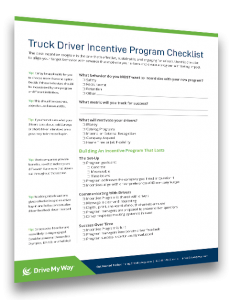










 We spoke with
  The best sign-on bonus program is the one that’s

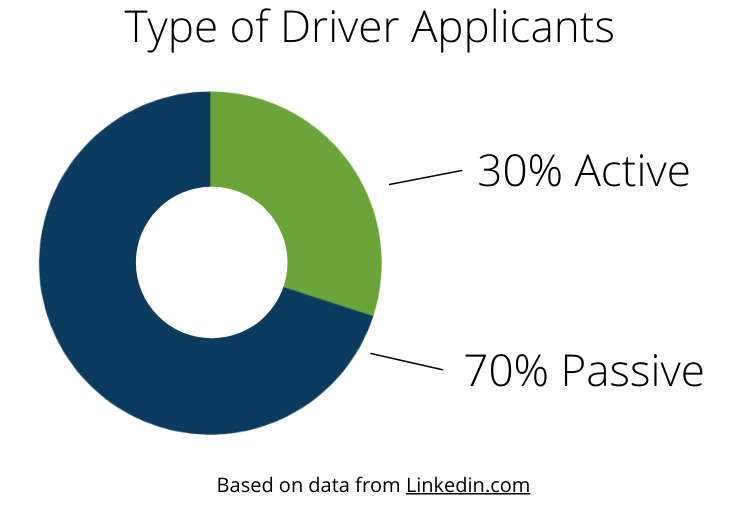
 When recruiting truck drivers, understanding the difference between active and passive driver applicants can be the difference between a consistent candidate pipeline and struggling to fill your fleet. Active driver applicants are ready to make a job change immediately. In contrast, passive driver applicants should be nurtured over time. An effective recruitment strategy should connect appropriately with active and passive driver applicants to allow you to nimbly shift recruitment strategies as company and drivers’ needs change.